


February 25, 2026
End of Content.
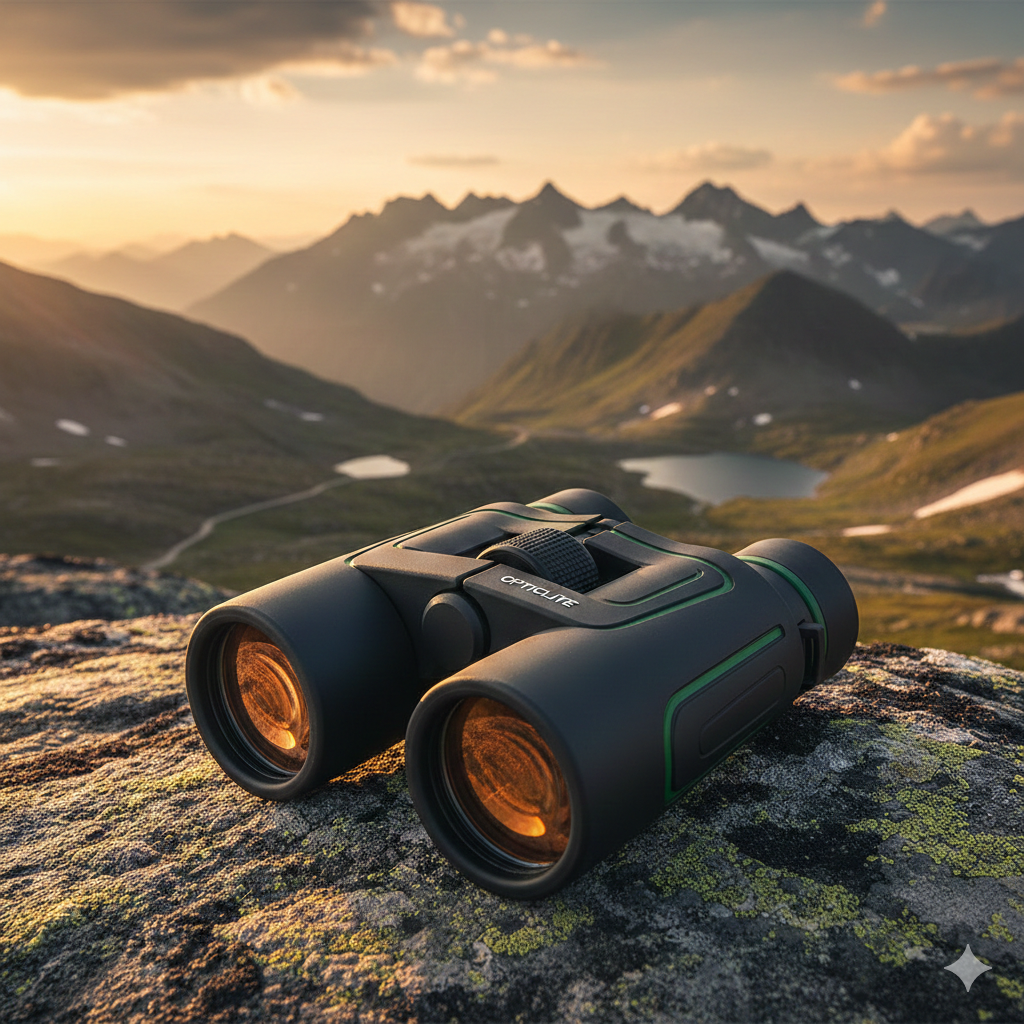
There’s a moment every hunter knows. You’re glassing a hillside at first light, trying to figure out if that dark shape in the timber is a buck or a stump. Your buddy next to you has cheap binoculars from a big box store. You’ve got a quality pair of best compact binoculars built for exactly this situation. The difference in what you each see in that moment is the difference between a filled tag and a long walk back to camp empty-handed.
Binoculars aren’t glamorous gear. Nobody talks about them the way they talk about rifles or bows. But ask any serious hunter what piece of gear they’d give up last, and most of them will tell you it’s their glass. Good optics find game. Everything else just closes the distance.
This article is going to walk you through everything that matters — what specs actually mean in the real world, how binoculars range finding works, what separates average hunting binoculars from great ones, and how to find the best binoculars for hunting that fit your style and budget.
Ten years ago, “compact” was almost a dirty word in the optics world. It meant small, lightweight, and compromised — dim images, poor edge clarity, flimsy construction. Serious hunters carried full-size 10×42 or 10×50 glass and dealt with the weight.
That’s changed a lot. Lens coatings, glass quality, and optical engineering have improved to the point where the best compact binoculars today can genuinely compete with mid-range full-size binos from a decade ago. You’re not giving up nearly as much as you used to.
This matters because compact binoculars are easier to carry all day, lighter in a pack, and more likely to actually be on you when you need them. The best binoculars in the world don’t help if they’re back at camp because you didn’t want to carry them up the mountain.
Every pair of binoculars has two numbers on them — something like 8×32 or 10×42. Here’s what those mean in plain English.
The first number is how many times closer the image appears compared to your naked eye. An 8x binocular makes things look 8 times closer. A 10x makes them look 10 times closer.
Higher magnification sounds better, but it comes with trade-offs. More magnification means a narrower field of view, more image shake from hand movement, and a dimmer image in low light. For most hunting situations, 8x is the sweet spot — enough magnification to see detail at distance, but stable enough to hold steady without a tripod.
10x is great for open country western hunting where you’re glassing long distances. 8x is better for timber, hills, and situations where you’re moving a lot.
The second number is the diameter of the front lenses in millimeters. Bigger lenses gather more light, which means brighter images — especially important at dawn and dusk when game is most active and light is lowest.
For compact binoculars, you’ll typically see 25mm to 32mm objective lenses. Full-size hunting binos usually run 42mm to 50mm. The trade-off is weight and size.
An 8×32 compact pair gives you a solid balance of light gathering and portability. For pure low-light performance, a 10×42 full-size wins — but you’ll feel that extra weight by mile four.
This is the diameter of the light beam that actually reaches your eye. You calculate it by dividing the objective lens size by the magnification. An 8×32 has a 4mm exit pupil. A 10×50 has a 5mm exit pupil.
Your eye’s pupil dilates to about 5–7mm in low light and contracts to 2–3mm in bright daylight. A larger exit pupil means a brighter image in low light conditions. For hunting at first and last light, this matters — it’s one reason serious hunters often choose larger objective lenses.
One of the most useful upgrades in modern hunting optics is built-in rangefinding capability. Binoculars range finding technology puts a laser rangefinder directly inside the binocular housing — so you’re ranging targets through the same optic you’re using to glass with.
This sounds like a small convenience. In practice, it changes how you hunt.
With traditional setup, you glass with your binoculars, spot an animal, then switch to a separate handheld rangefinder to get the distance, then switch back to glass. Every time you switch devices, you risk losing the animal — especially in timber or broken terrain where a deer or elk can disappear in seconds.
With binoculars range finding built in, you glass and range in one fluid motion. You see the buck, you hold the range button, and you have the distance without ever moving the glass off the animal. For bowhunters especially, where distance judgment is critical, this is a serious advantage.
Maximum ranging distance — Look for units that can reliably range deer-sized targets at 600–800 yards minimum. Premium units can range out to 1,500 yards or more on reflective targets.
Angle compensation — If you’re hunting mountains or shooting from elevated positions, you need angle-compensated ranging. A shot that’s 400 yards away but steeply downhill plays like a much shorter shot ballistically. Good rangefinding binos calculate the actual shooting distance, not just the straight-line distance.
Ranging speed — The time between pressing the button and getting a reading matters when an animal is about to step back into cover. Fast ranging units respond in under a second.
Display clarity — The range reading should be easy to read in bright sunlight and low light without washing out or being hard to find in the field of view.
Not all binoculars are built the same. A pair designed for birdwatching or a day at the races is fundamentally different from purpose-built hunting binoculars — and the differences matter when you’re three miles from the truck in nasty weather.
Quality hunting binoculars are fully waterproof and fog-proof. Waterproof means sealed with O-rings so rain and submersion don’t kill them. Fog-proof means the interior is purged with nitrogen or argon gas so internal fogging doesn’t occur when temperatures change rapidly — like when you walk out of a warm truck into cold morning air.
If a binocular isn’t listed as waterproof and fog-proof, it has no business being a hunting optic.
Rubber armor coating isn’t just about looks. It protects the housing from impacts, reduces noise when you bump the binos against a tree or rock, and gives you something to grip when your hands are cold and wet. Good hunting binos feel solid and quiet in your hands — cheap ones rattle and feel hollow.
Hunting happens at dawn and dusk. That’s not a coincidence — that’s when deer, elk, and most game are most active. Your hunting binoculars need to perform in low light conditions, not just bright midday sun. This comes down to glass quality, lens coatings, and objective lens size
Field of view describes how wide an area you can see through the binoculars at a given distance — usually expressed as feet at 1,000 yards. A wider field of view makes it easier to track moving animals and glass large areas quickly. For hunting in timber or brushy terrain, a wide field of view is especially useful.
If you wear glasses, eye relief is critical. It’s the distance your eye needs to be from the eyepiece to see the full image. Most eyeglass wearers need at least 15mm of eye relief. Check this spec before buying if you wear glasses — it’s easy to overlook and miserable to deal with in the field.
There’s no single answer to “what are the best binoculars for hunting” because it depends entirely on how and where you hunt. Here’s how to think about it.
If you’re hunting mule deer, elk, or pronghorn in open western terrain, you’re glassing long distances and spending hours behind your binos. This is where optical quality matters most because fatigue from poor glass is real — your eyes literally get tired from looking through cheap optics for extended periods.
For this application, the best binoculars for hunting are typically 10×42 or 10×50 units with top-tier glass from brands known for optical excellence. Many western hunters also use a tripod adapter to stabilize their binos for extended glassing sessions. Weight matters less because you’re often set up in one spot for a long time.
For whitetail deer hunting in the east and midwest, you’re typically working in tighter terrain — woods, field edges, river bottoms. Long-range glassing is less common, and you’re more likely to be moving through cover than sitting and glassing a hillside.
Here, compact binoculars shine. An 8×32 or even 8×25 compact pair is light enough to wear around your neck all day without noticing, and you’re rarely needing to glass past 300 yards anyway. The best compact binoculars for whitetail hunting prioritize low-light performance for early morning stand sits and a wide field of view for tracking deer through brush
Turkey hunters are often moving, calling, and reacting quickly to birds that can appear from any direction. Compact, lightweight binoculars with a wide field of view work best here. You want to be able to glass quickly, identify a tom from a hen, and put the glass away fast when the bird is closing in.
Waterfowl hunters benefit from binoculars with a wide field of view and good close focus distance for identifying birds in flight or on the water. Waterproofing is non-negotiable — marsh hunting means wet conditions constantly.
If you’re covering serious miles — backpack elk hunts, high country mule deer, mountain goat — every ounce in your pack matters. The best compact binoculars for pack hunting balance optical quality with minimum weight. Some hunters compromise slightly on glass quality to save half a pound over a 10-day hunt. Others refuse to compromise and just accept the weight. Know which type of hunter you are.
This is where a lot of people get surprised. Quality optics aren’t cheap, and there’s a reason for that.
Under $200 — You’ll find compact binoculars that work fine for casual use — a day hike, a football game, basic nature watching. For serious hunting use, expect to notice the difference in low light and after extended glassing sessions. Fine for getting started, but most hunters outgrow this range.
$200–$500 — This is where things start getting genuinely usable for hunting. Mid-range binos from solid brands offer good optical quality, real weatherproofing, and enough performance to handle most hunting situations. Good value range for hunters who are serious but budget-conscious.
$500–$1,000 — This is the sweet spot for most dedicated hunters. You’re getting quality glass, solid construction, reliable weatherproofing, and optical performance that holds up during long days in the field. The best compact binoculars in this price range will last you a decade or more with proper care.
$1,000 and up — Premium optics territory. The difference between a $700 pair and a $1,500 pair is real but subtle — better edge-to-edge clarity, superior low-light performance, and often lighter weight through premium materials. For serious western hunters who spend 20+ days a year glassing, this investment makes sense. For the weekend hunter, the mid-range is probably enough.
Buying on magnification alone. More power isn’t always better. Higher magnification means shakier images and a dimmer picture in low light. Match the magnification to how you actually hunt.
Skipping the fog-proof spec. Internal fogging is a real problem in cold weather. Don’t buy hunting binoculars that aren’t fog-proof — you’ll regret it on your first cold morning hunt.
Not trying them before buying. Optical quality is something you have to see to truly appreciate. If you can, handle and look through binoculars before purchasing. The difference between good glass and great glass is immediately obvious when you actually look through them.
Ignoring the harness system. Carrying binoculars around your neck on a basic strap for 8 hours is painful. A good binocular harness system distributes the weight across your chest and keeps the binos from swinging and banging around. It’s a small investment that makes a big difference in comfort.
Buying based on reviews alone. Reviews are helpful, but everyone’s eyes are different. What one person finds perfectly bright and clear, another might find slightly dim or with too much color fringing. Use reviews to narrow your choices, then try to look through your top picks if at all possible.
If you’re serious about hunting, investing in quality best compact binoculars is one of the smartest things you can do. Good glass finds game that cheap glass misses. It’s that simple.
Whether you need purpose-built hunting binoculars for whitetail season, binoculars range finding capability for western big game, or you’re just trying to figure out the best binoculars for hunting your specific terrain and budget — the right pair is out there and it’s worth taking the time to find it.
Don’t buy the cheapest option and wonder why hunting feels harder than it should. And don’t over-buy a $2,000 pair when a $600 pair would serve you just as well for how and where you hunt.
Check out our full selection of best compact binoculars and hunting optics in the store. We stock options at every price point, and if you have questions about which pair fits your hunting style, reach out. We hunt too, and we’re happy to point you in the right direction.

Authorized Dealer

Easy 30-Day Returns

Free Shipping 3-5 business days

Expert Support
Subscribe to our Newsletter for exclusive offers, company news and events.
© 2025 Sights Force